

Sign Language helps children express needs and strengthen bonds with caregivers.
At Kids & Company, sign language is thoughtfully incorporated into our programming from as early as our Infant program.
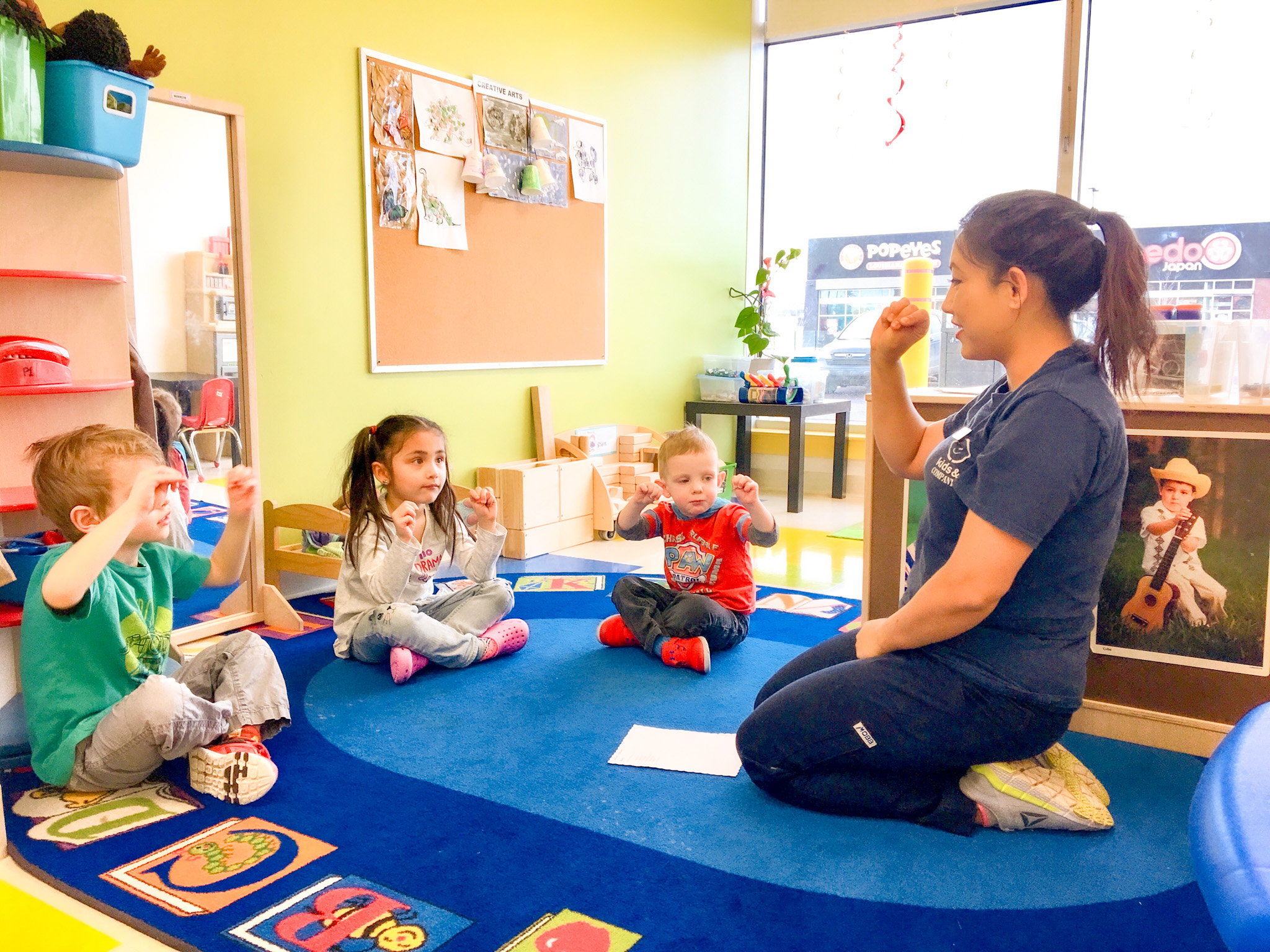
Young children naturally learn through movement, imitation, and play. As a visual and kinesthetic language, sign language fits seamlessly into how children begin to explore their world. Through songs, stories, daily routines, and everyday interactions, educators introduce simple signs alongside spoken words, making communication engaging, playful, and meaningful.
There are many benefits to introducing sign language in early childhood, from supporting communication and emotional development in Infants, to fostering confidence and connection in Preschoolers. Below are some of the ways sign language supports children’s growth during these formative years.
A Strong Communication Bridge
Before children develop full verbal skills, they often know exactly what they want—but don’t yet have the words to express it. Sign language gives them a voice during this important stage and helps adults better understand their needs. By offering an additional way to communicate needs, feelings, and interests, signing can help reduce frustration and support calmer, more confident interactions.
Many families notice that learning signs helps cut down on tantrums and makes daily routines, like mealtimes and transitions, feel smoother for everyone.
Supporting Language & Literacy Development
One common misconception is that sign language replaces speech. In reality, it does the opposite. At Kids & Company, educators speak the word while signing it, reinforcing verbal language and helping children make strong connections between meaning, sound, and gesture.
This multi-sensory approach supports early language development and lays an important foundation for future literacy skills.
Encouraging Cognitive Growth
Learning sign language strengthens children’s ability to observe, focus, and imitate, key building blocks for learning at every stage. As our children watch, process, and repeat signs, they are actively engaging their memory, attention, and problem-solving skills.
Promoting Social & Emotional Development
Being understood builds confidence. When children can clearly express themselves, they feel empowered and secure. Signing encourages positive social interactions, strengthens relationships with educators and peers, and supports emotional development.
Beyond the Classroom
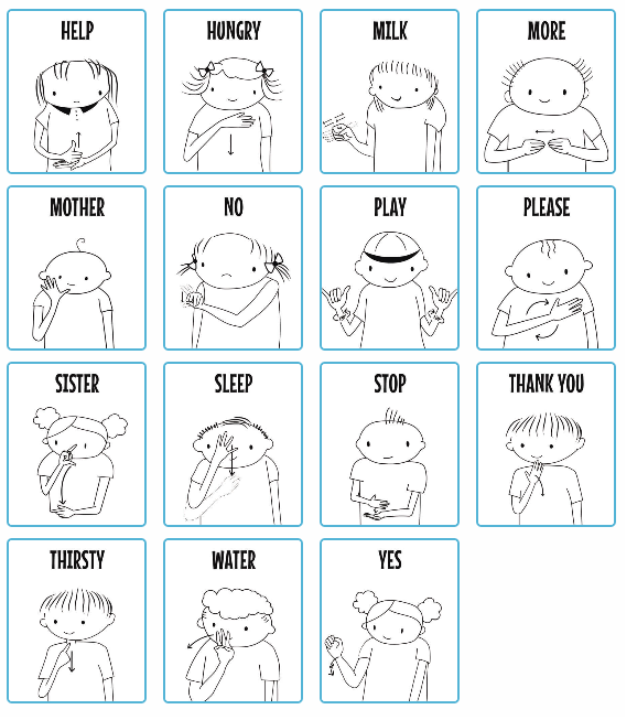
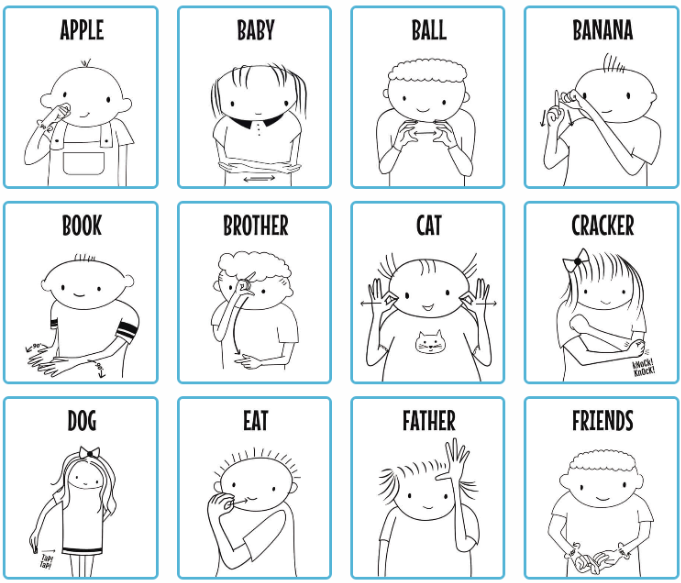
One of the most rewarding parts of our sign language program is seeing it extend beyond the classroom. We encourage parents and caregivers to learn some of the most common and useful signs so communication can continue seamlessly between home and child care. Check out our Sign Language Glossary Below of the most frequently used signs!
By introducing sign language early, educators help children build confidence, reduce frustration, and develop strong communication skills that support them now and well into the future. This is just one of the many ways our curriculum is designed to nurture the whole child, right from the very beginning.