

At Kids & Company, yoga is thoughtfully woven into our early learning programs as a fun, engaging, and age-appropriate way to support children’s overall well-being.
Yoga aligns naturally with play-based learning. Through imaginative stories, animal poses, music, and movement, children participate joyfully while developing important skills that support both their physical and emotional development.
There are many benefits to incorporating yoga into early learning programs, and families often see its impact both in the classroom and at home. When introduced in a playful and supportive way, yoga helps children build awareness of their bodies, strengthen emotional regulation, and develop focus and confidence.
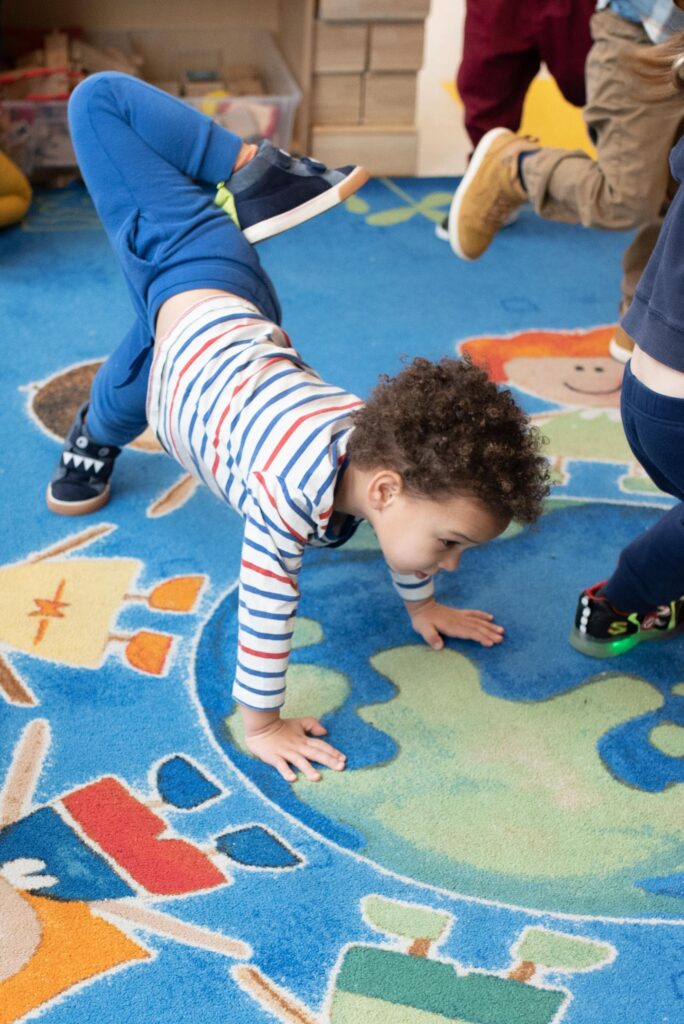
Supporting Physical Development
Yoga helps children build strength, balance, posture, and coordination in a gentle and playful way. As children move through poses, they become more aware of how their bodies work and how to control their movements. These experiences support self-regulation and body awareness, important foundations for both active play and quiet learning moments.
Building Emotional Regulation & Self-Awareness
Learning how to pause, breathe, and move with intention gives children valuable tools for understanding and managing their emotions. Yoga introduces simple breathing and mindfulness techniques that help children recognize how they’re feeling and respond in healthy ways.
Over time, these practices can support children in calming their bodies, building resilience, and navigating big emotions with growing confidence.
Promoting Mental Focus
Yoga encourages children to slow down, listen, and follow along, skills that naturally support concentration and attention. Whether holding a pose or flowing through a movement story, children practice focusing their minds and staying present in the moment.
Reducing Stress & Anxiety
Even young children experience stress as they adjust to new environments, routines, and social situations. Yoga provides a calming outlet that helps release tension and create a sense of safety and relaxation.
Encouraging Social & Emotional Skills
Yoga is often practiced together, helping children develop empathy, patience, and respect for others. Group activities encourage turn-taking, cooperation, and awareness of personal space, while also building a sense of community and connection within the classroom.
By introducing yoga in early childhood, educators empower children with lifelong tools for physical health, emotional well-being, and mindfulness. These skills help support healthy bodies, calm minds, and confident hearts, now and into the future.