

Please and Thank You are the basics when it comes to good manners, but it takes consistency and modeling good behaviour to make them second nature to children. We believe that teaching kids to say please and thank are very important. It shows respect for our classmates and teachers. It softens demands into requests. It helps children think of others even as they are trying to meet their own needs. How do we work these polite words in to our classrooms? Here are some of techniques we use with our youngest students.
Model It: First and foremost, we use these words in our requests and daily interactions. As we share toys, sing songs on the rug, toss a ball on the playground or practice yoga poses, we use our please and thank yous with the children. They learn from and model this behaviour.
Babies can say please too: Two of the sign language signs we use most often and consistently with our babies and toddlers are “Please” and “Thank You”. We’ve found that sign language greatly helps down on frustration levels when young children are trying to make themselves understood. When they add the sign for “Please” when they reach for their milk or “Thank you” when handed a toy, it demonstrates how much a baby understands about pre-verbal communications and her interactions with others. We sometimes see “thank you” games when babies repeat the sign over and over with their teacher or classmate. (Very adorable!)
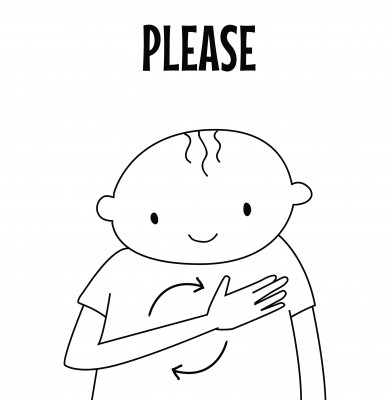
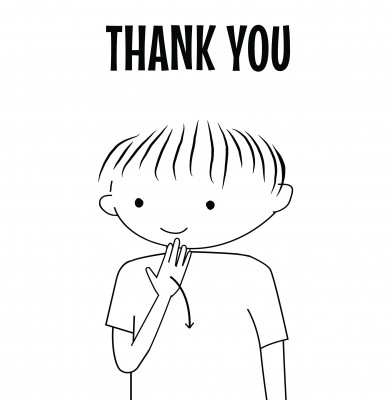
Try Again: During an excited or frustrated moment, we can all forget our manners. When a child forgets to add please to a request or demands something from another, we ask them to try again using their polite words. Often, this is all of the prompt needed.
Be consistent: Words and actions used every day become habit, so we use these words over and over. Children need to hear these words at home, at school/child care and on the playground. Sometimes children consistently use their manners, then “forget” when they reach a new stage of development. The key is to have patience and reinforce the behaviour you want, over and over (and over).
The Five Minute timer – This is an idea I’ve read about and am thinking about using with my school age children. Set a timer for five minutes if there is no please. The kids can ask again for what they want after waiting 5 minutes. This would be hard with toddlers (5 minutes is a LONG time for them). But it may be just what we need for my 10 year old who is experimenting with boundaries.
What about your home? What are some techniques you use to teach and reinforce good manners? Will you please tell us? Thank you!